
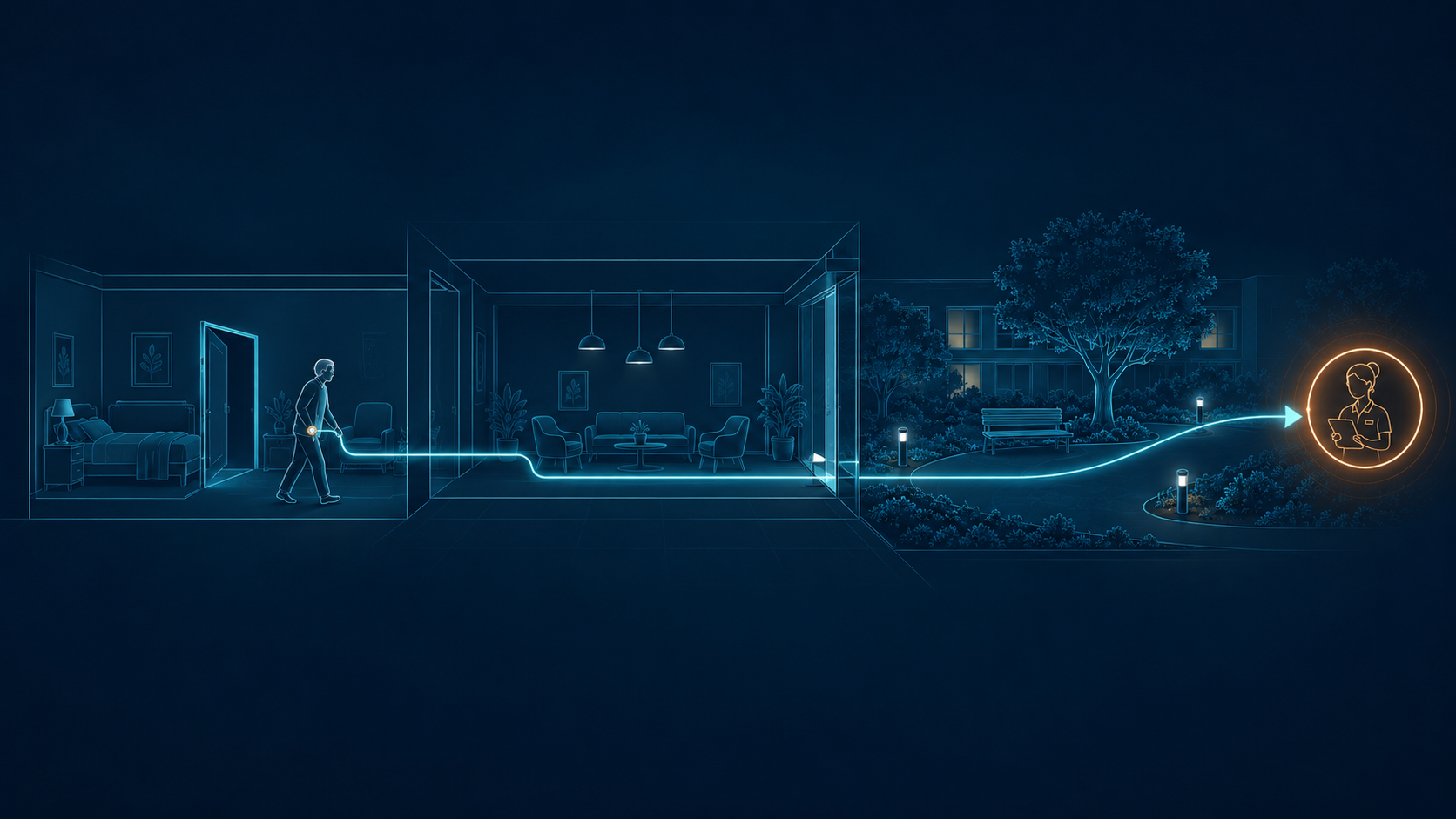
Resident safety has to follow the resident. No resident stays in one room. People walk to meals, visit neighbors, attend programs, use courtyards, and move between buildings. Risk moves with them. Coverage that ends at the apartment door leaves gaps in the places where daily life happens.
Falls show the scale of the problem. CDC research found that 14 million US adults aged 65 and older reported a fall in 2020. CDC's current falls summary estimates about 3 million emergency department visits from older adult falls each year. Fall detection remains central, while the wider safety plan must also cover wandering, unexpected inactivity, door events, calls for help, and changes in normal movement.
CMS includes falls with major injury and nursing staff turnover among the measures used in the Skilled Nursing Facility Value-Based Purchasing Program. Leaders in assisted living and memory care work under different regulatory structures, yet they face the same operational questions. Teams need to know where a resident may need help, what changed, and how quickly the right person can respond.
Detection without context slows response
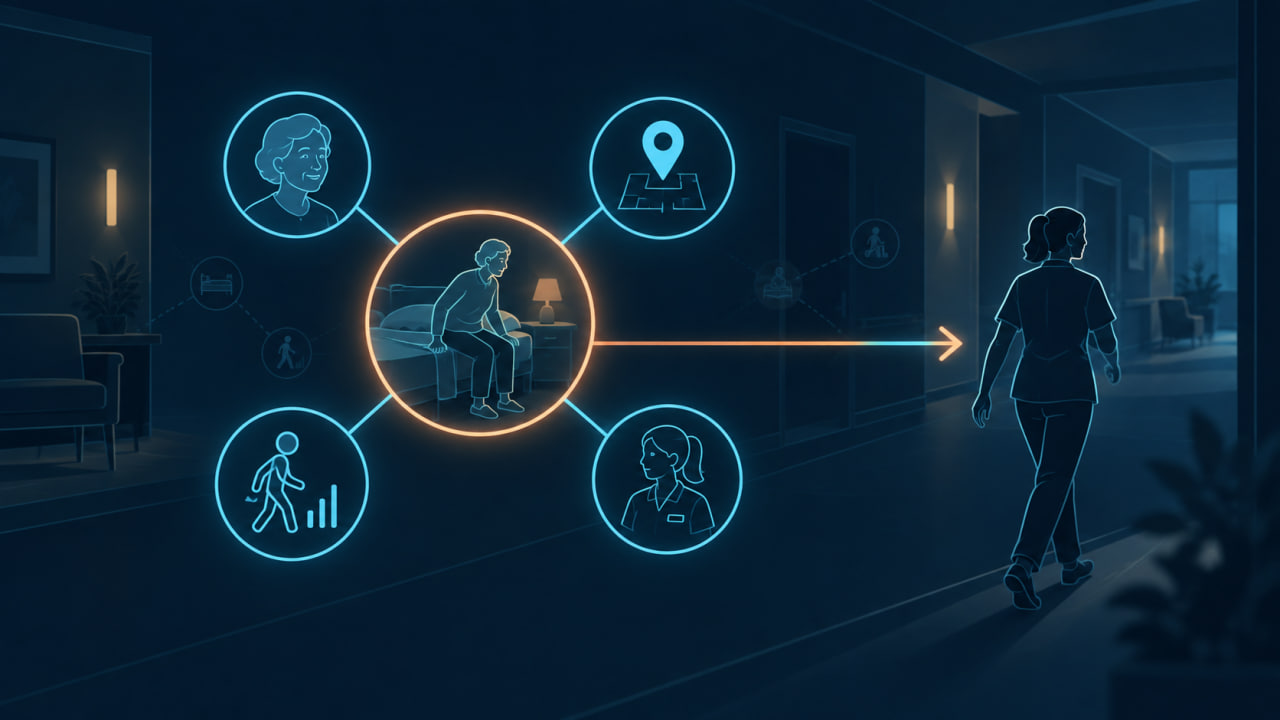
Safety alerts are useful only when staff can act on them. Location, movement, room, and door information can help a care team distinguish an urgent event from routine activity. Clear context also supports better escalation when the first responder cannot reach the resident.
During an overnight shift, a low-context alert can force staff to call another team member, search a floor, or open a second system before they understand what happened. Repeated alerts with the same priority make it harder to see which resident needs attention first. Missed or disconnected signals also leave clinical and risk leaders with an incomplete timeline during incident review.
Useful monitoring should help staff answer four questions quickly.
- Who may need help
- Where the resident is
- What changed
- Who should respond
Those answers matter during staffing shortages and shift handoffs. Connected event records can also give leaders a clearer view of detection, escalation, and response.
The data gap is measurable. In 2025, the HHS Office of Inspector General found that nursing homes failed to report 43 percent of falls with major injury and hospitalization among Medicare-enrolled residents in required assessments. The finding concerns nursing homes, yet it shows why safety leaders need a dependable event record. Teams cannot review patterns or improve response when serious events are missing from the data.
Fragmented systems add work
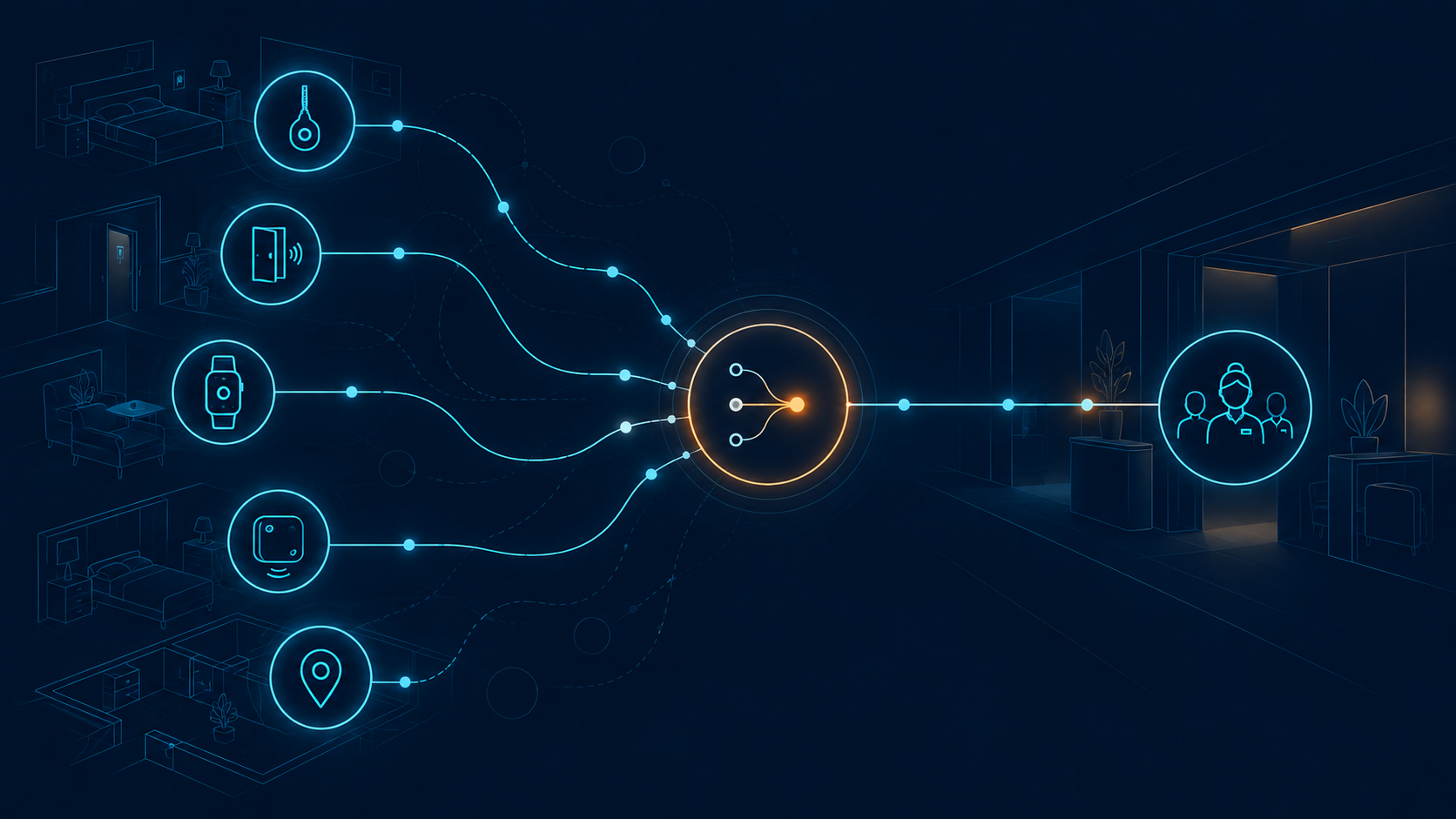
Many communities run nurse call, door access, wander management, wearables, and in-room sensing through separate vendors. Each system can bring its own dashboard, device maintenance, escalation rules, and support contact. Staff then carry the integration burden during the moment when speed matters most.
Turnover makes the problem harder. New employees must learn which alert appears on which screen and who owns the next step. Overnight teams may cover several areas with fewer people, so duplicate or low-context alerts compete with direct resident care.
Portfolio leaders often inherit a different safety stack at each property. Local variation complicates training and makes cross-community comparison unreliable. Unified event handling gives staff one place to see the signal, resident location, escalation path, and response status.
Privacy and independence shape adoption

Residents need safety without feeling watched. Cameras in private spaces can create legal, ethical, and family concerns. Passive sensors and wearables can provide useful signals with less intrusion. Communities still need clear consent rules, role-based access, data retention limits, and an explanation residents and families can understand.
Memory care makes the balance more urgent. The Alzheimer's Association reports that six in 10 people living with dementia will wander at least once, and many do so repeatedly. Residents may also be unable to initiate a call for help or follow a wearable routine without support.
When awareness ends at a doorway, communities may limit movement or add manual checks. Coverage across common areas and outdoor spaces can help staff notice an exit or unusual movement while residents continue to walk, socialize, and use the full campus. Families need plain answers about what the system detects, what it records, and who can access the information.
Shared infrastructure supports portfolio decisions
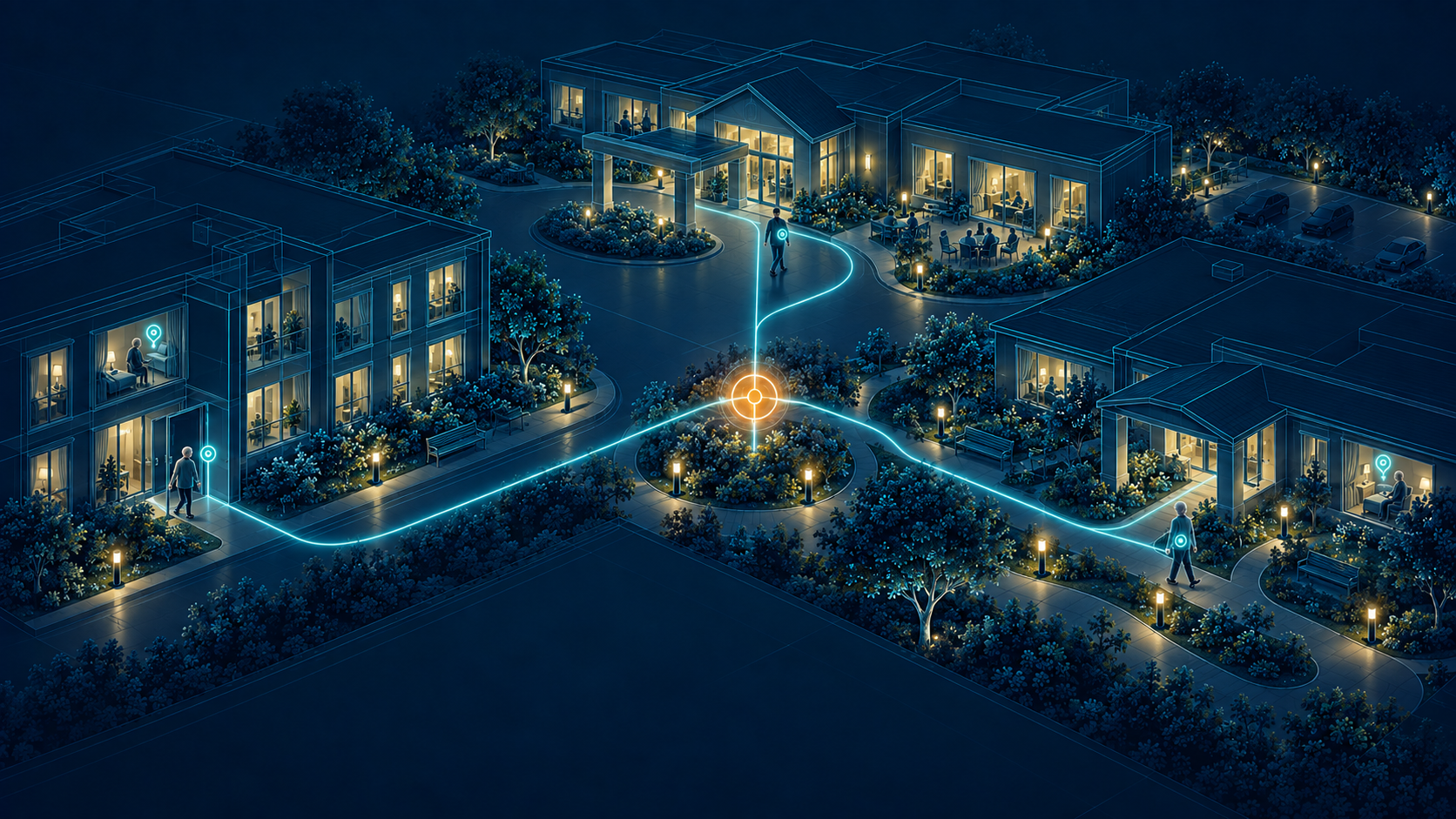
Owners and operators buying resident safety technology make a long-term infrastructure decision. Devices, gateways, location services, access control, and response software have to work together inside an occupied building. Deployment, maintenance, training, and integration can matter as much as a single feature.
IT leaders often inherit older buildings, mixed network conditions, and systems installed by different contractors. Pilots that work in one community can become expensive across a portfolio when every location needs a separate gateway, integration, or support model. Cybersecurity review, uptime, battery management, and vendor support all affect whether the system will survive daily operations.
Operations teams need reliable coverage and consistent escalation. Risk leaders need a defensible record of how alerts moved and when staff responded. Executives need a comparable view across communities before they can set a portfolio standard or approve capital spending.
Shared infrastructure can support wearables, in-apartment sensing, wander awareness, door events, and staff response without turning each capability into a separate project. The same foundation should allow a community to add use cases without replacing the entire safety stack.
Questions for a resident safety review
Leaders can use these questions to test whether a resident monitoring system fits the way their community operates.
- Does coverage extend through apartments, shared spaces, outdoor areas, and the routes between them
- Do alerts include enough context for staff to judge urgency and location
- Can teams manage events and escalations in one workflow
- How does the system protect privacy and support resident choice
- Will the event record support incident review and reporting
- Can the technology connect with the current nurse call, access, and care workflows
- Can the infrastructure expand across a portfolio without repeated replacement
Rythmos Safety Without Walls Recognized by McKnight’s

McKnight’s recognized Intrex in its 2026 Tech Awards for “Modern resident safety without walls,” based on work completed with Swank Assisted Living and powered by Rythmos. The project was recognized in the Resident / Patient Monitoring and Safety category, which focuses on technology that improves resident well-being and reduces risk.
Rythmos supports continuous awareness across apartments, shared spaces, and outdoor areas. Staff receive useful context as residents move through the community, while residents can continue their daily routines with fewer unnecessary restrictions.
Resident safety technology should shorten the path from signal to informed response while preserving freedom of movement. Senior living leaders can use both outcomes as a practical standard when evaluating resident monitoring systems.
FAQ
What does Safety Without Walls mean in senior living?
Safety Without Walls is Rythmos by Intrex's approach to continuous resident awareness across apartments, shared spaces, and outdoor areas. It connects relevant safety signals with location context and staff workflows so the right team member can understand what is happening and respond through a defined process as residents move through the community.
Why is fall detection alone not enough for resident safety?
Fall detection addresses one event after it may have happened. Resident safety also includes wandering, delayed assistance, unsafe transitions, missed alerts, and risks that develop as a person moves through the community. Stronger resident safety combines reliable signals with location context, clear escalation, incident review, and staff workflows that support both response and prevention.
Why should resident safety coverage extend beyond apartments?
Residents move between apartments, corridors, dining rooms, activity areas, entrances, and outdoor spaces. Safety gaps often appear along those routes or where one system stops and another begins. Coverage across the community helps staff keep useful context as a resident moves, so an event is less likely to become an isolated alert with no clear location or owner.
How can senior living communities improve safety without limiting resident independence?
Communities can start with the least restrictive response that matches each resident's needs and care plan. Technology should support freedom of movement while giving staff useful awareness when assistance may be needed. Clear consent, configurable workflows, appropriate escalation, and regular review help teams balance safety, privacy, resident choice, and operational responsibility.
Does continuous resident awareness require cameras?
No. Communities can build awareness from wearable devices, location services, door events, environmental sensors, resident calls, and other signals. The right mix depends on the use case, the building, resident consent, privacy requirements, and staff workflow. Operators should understand what each technology collects, where data is stored, who can access it, and how long it is retained.
What should senior living operators evaluate in a resident monitoring system?
Operators should evaluate coverage, alert quality, location context, escalation, response documentation, privacy, cybersecurity, uptime, battery management, integrations, and vendor support. Portfolio leaders should also test whether the system can work across different buildings without creating a separate workflow for every community. Pilots should measure the full path from signal to staff response.