
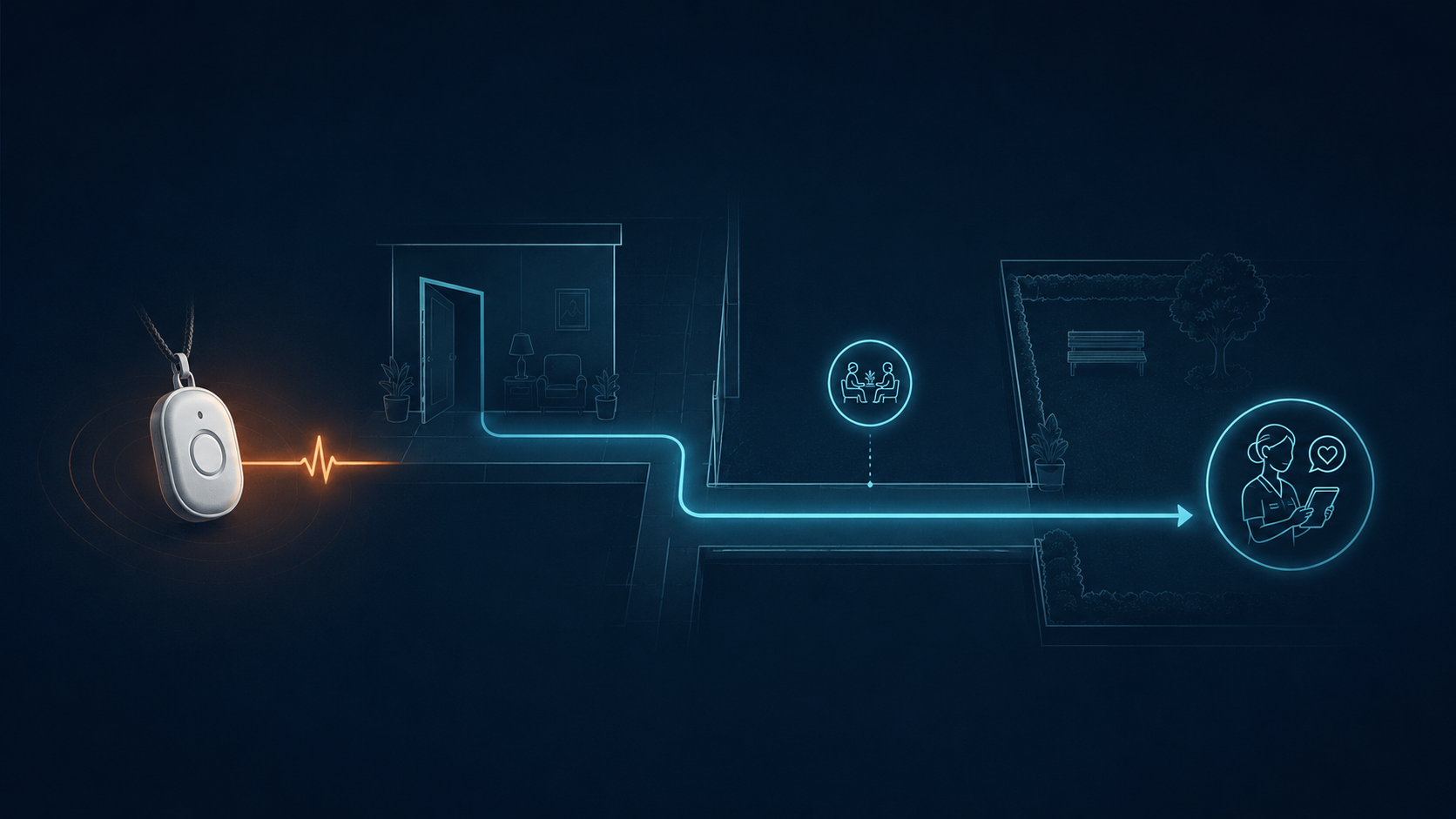
A resident activates a wearable call button while walking in the courtyard. Another resident approaches an exterior door at an unusual hour. A fall alert is triggered in an apartment, but the resident has already moved into the hallway by the time staff arrives. In each case, location matters, but a dots on a map is not enough. Senior living teams need to know:
- Who needs help?
- Where are they now?
- What happened?
- Who owns the next action?
This article explains what to evaluate, what to measure, and how to run a pilot that supports a clear business decision.
What RTLS means in senior living
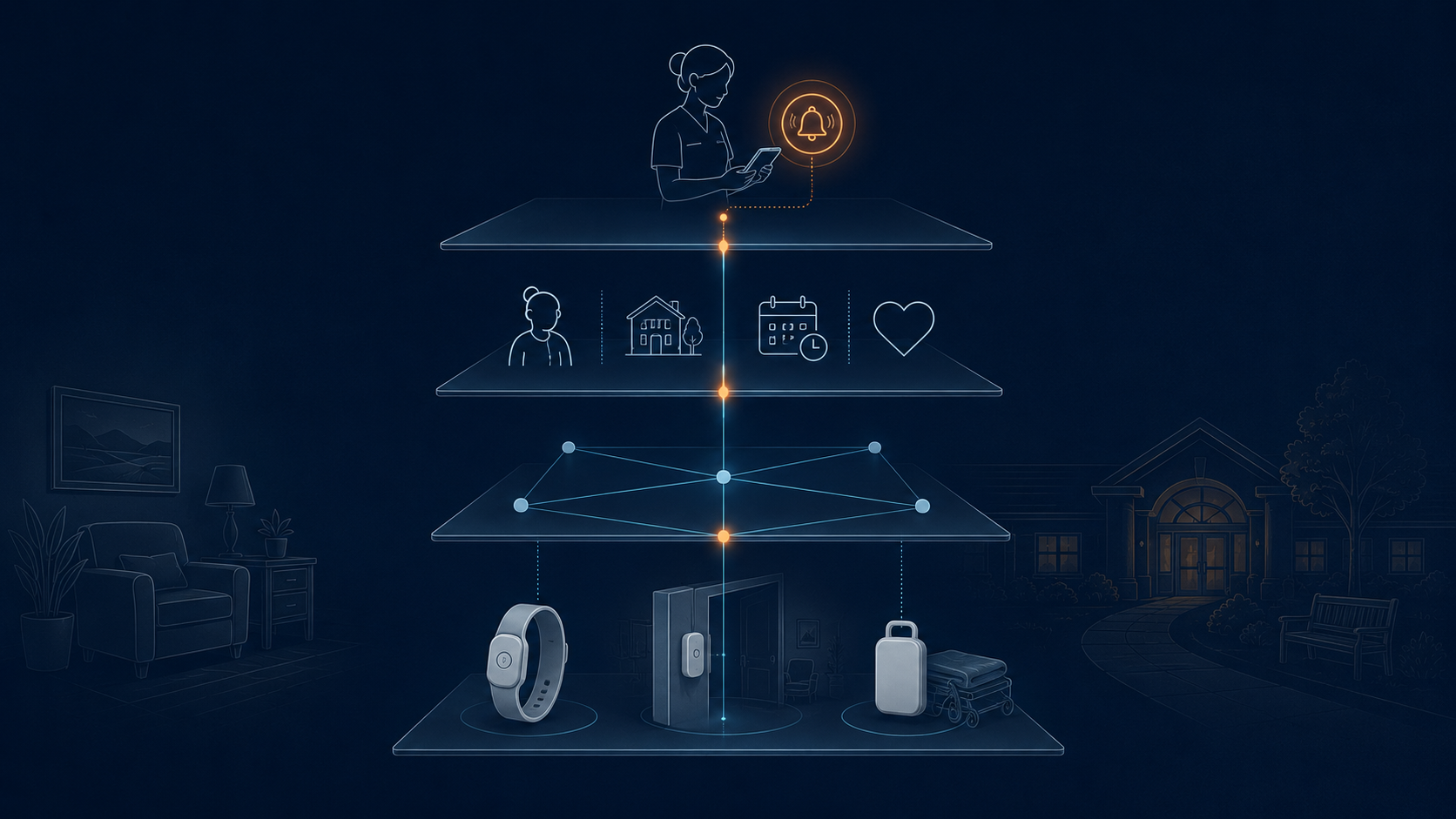
RTLS stands for real-time location system or real-time locating system. In senior living, it connects devices, location infrastructure, software, and staff workflows. The result is usable context for resident safety, staff assistance, or asset operations.
Real-time doesn’t mean zero delay. Update speed depends on the device, network, configuration, and event workflow. Ask vendors to demonstrate measured performance in the proposed community.
Several product categories overlap:
• Resident location systems show a current or last-known location.
• Wander management systems focus on doors, boundaries, and residents at risk of elopement.
• Location-enabled nurse call adds current location to a resident request.
• Location and safety platforms connect several event sources to shared response workflows.
The label matters less than the operating result. Buyers need to know what the system detects, where it works, what staff receive, and what happens next.
Why location and response matter
The risk is material. The Alzheimer’s Association reports that six in ten people living with dementia will wander at least once, and many do so repeatedly.
Falls also create a large operational burden. CDC STEADI states that more than one in four adults aged 65 and older falls each year. More than three million older adults receive emergency department treatment for fall injuries annually.
RTLS doesn’t prevent every fall or wandering event. Its value is narrower and more practical: detect relevant events, add location and context, route the response, and preserve a record for review.
Evidence also argues for disciplined implementation. A 2021 systematic review of 12 publications found that local workflows, usability, communication, governance, and evaluation shape adoption.
The evidence base was still limited. Operators should therefore pilot the full workflow and measure it onsite instead of accepting broad claims.
Start with the business problem
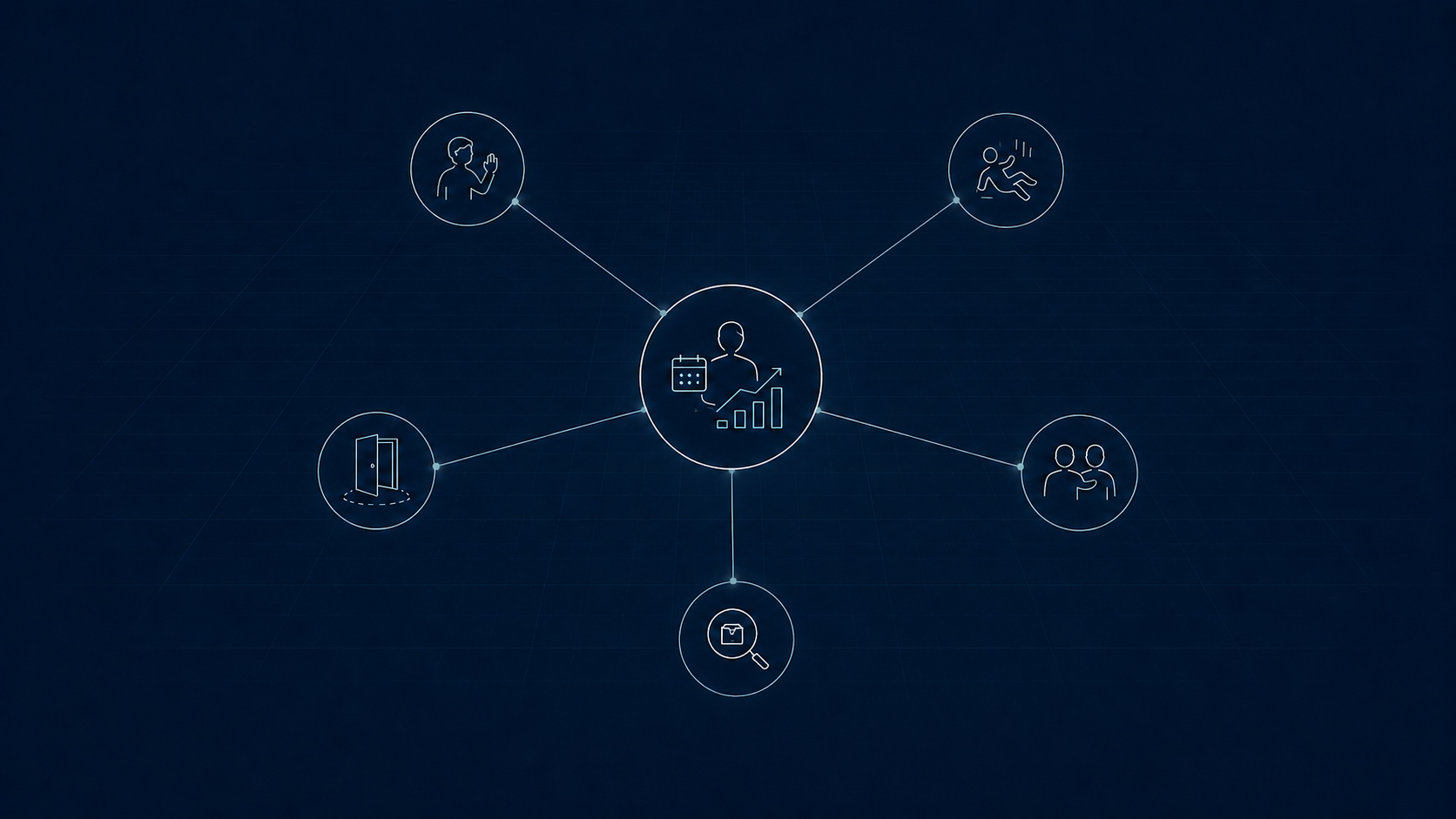
Choose the workflow before choosing the technology. Each use case needs an owner and a measurable result.
Don’t use one success metric for every workflow. Asset tracking may tolerate zone-level location. A time-sensitive resident event may need higher precision and faster delivery.
How a senior living RTLS works
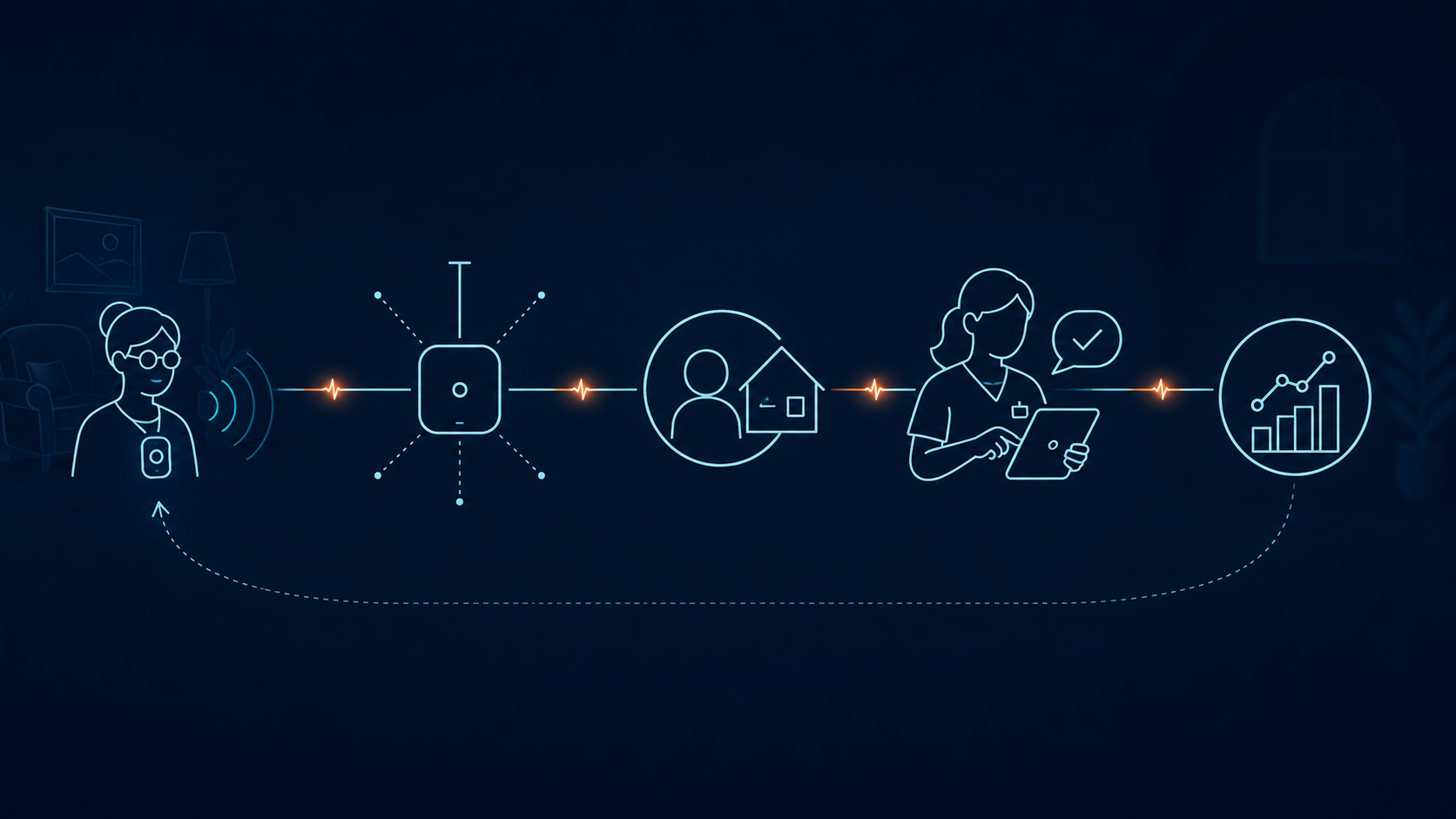
The operating sequence is simple:
1. A device or sensor creates an event. The source may be a wearable button, tag, door interaction, fall-related signal, or connected sensor.
2. Infrastructure receives the signal. Gateways, anchors, access points, mesh nodes, or readers help establish location.
3. Software adds context. The platform associates the event with a person or asset, location, priority, time, and rule.
4. The workflow assigns action. Staff receive the event, acknowledge it, escalate it when needed, and close it.
5. The result becomes operational data. Leaders review response, exceptions, coverage gaps, and maintenance patterns.
Which location technology fits the use case?
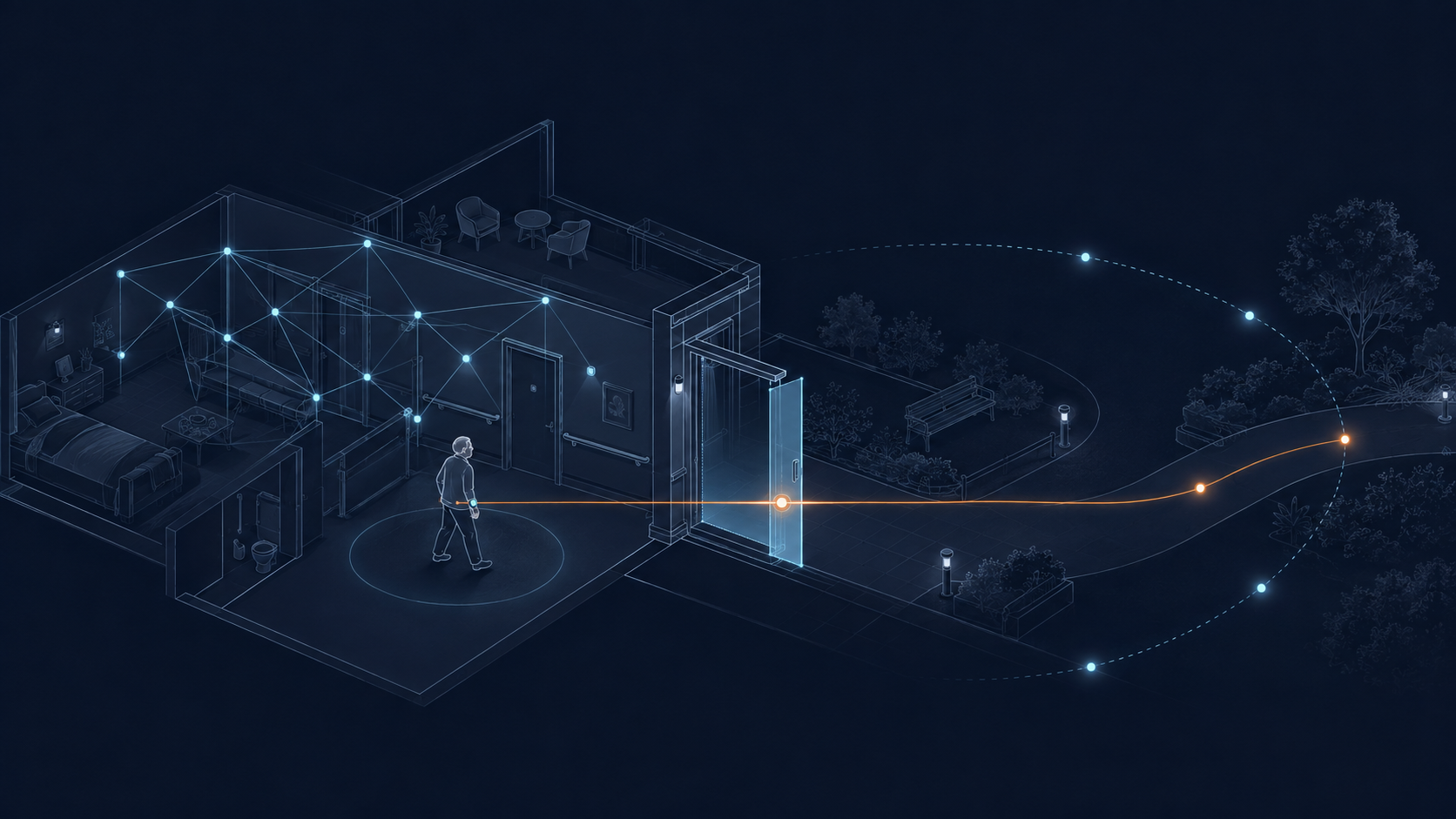
RTLS is not one radio technology. Strong platforms may combine several methods. Implementation quality often matters as much as the protocol.
No technology is universally best. Define the required behavior, then ask the vendor to prove it in the target environment.
What the platform must prove
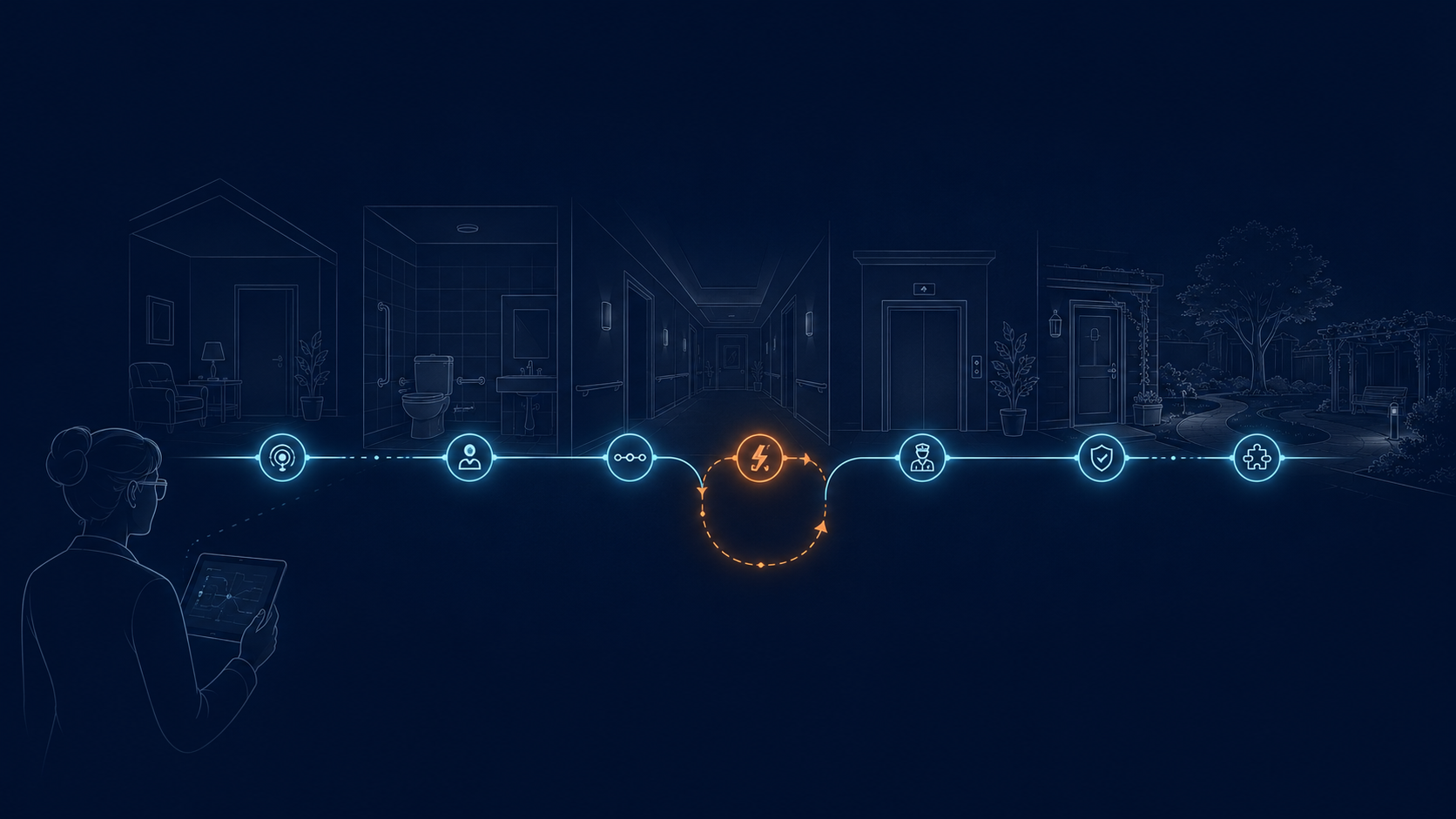
Feature lists make products look similar. Daily operations reveal the difference.
1. Coverage follows the resident journey
Test apartments, bathrooms, corridors, common spaces, elevators, stairs, exits, courtyards, parking areas, and building transitions. Floor plans do not show radio behavior or normal movement.
2. Location includes useful context
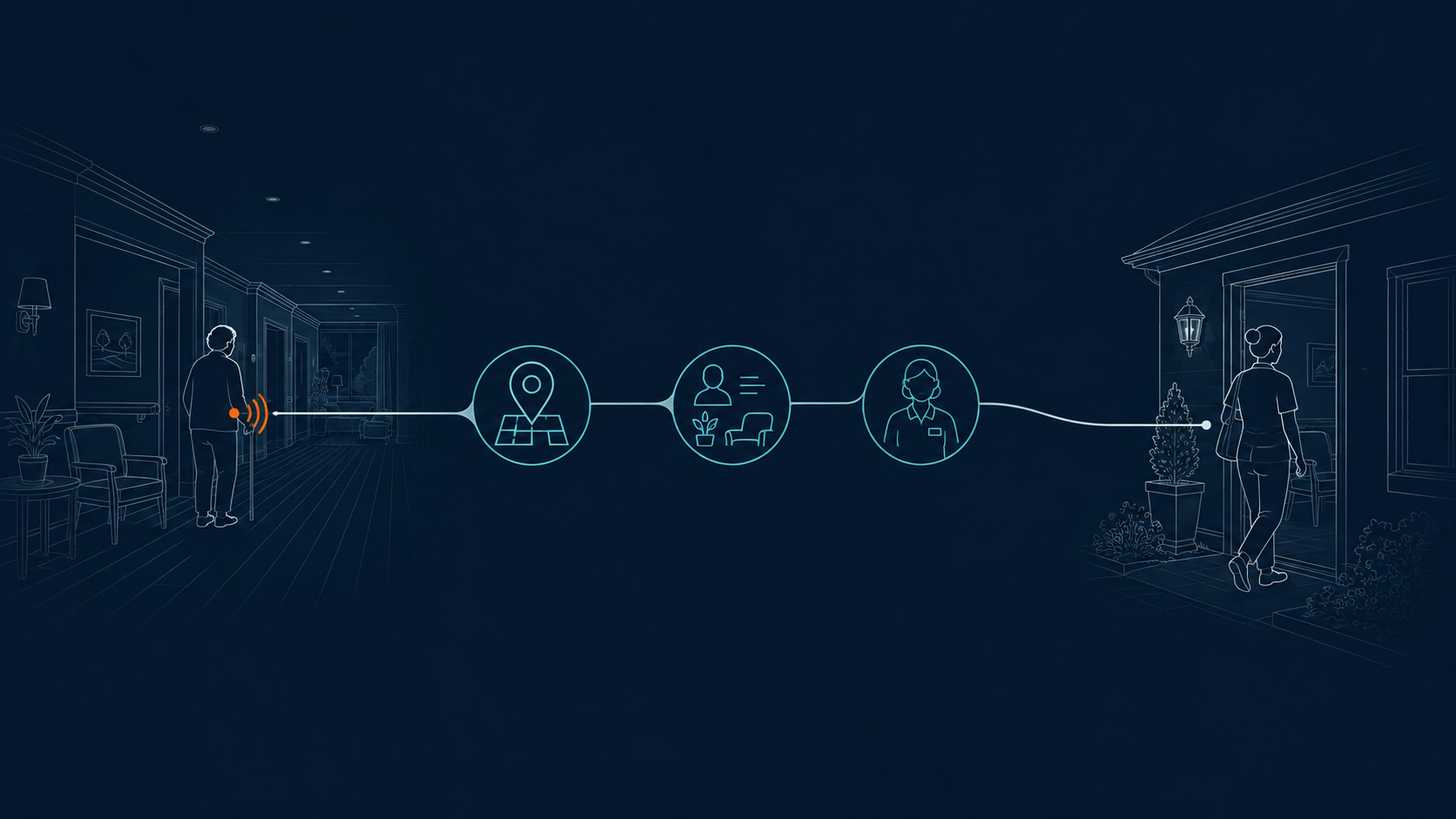
Staff needs more than a zone name. The event should carry identity, event type, priority, time, current or last-known location, and expected action where appropriate.
3. The workflow survives real shifts
Follow one event from trigger to closure. Test acknowledgment, escalation, reassignment, duplicate alerts, unavailable responders, shift changes, and incorrect closure.
4. Failure behavior is explicit
Ask what continues during power loss, internet outage, gateway failure, depleted battery, or integration downtime. “Redundant” is a claim. A recovery test is evidence.
5. Staff can operate it
Check charging, battery replacement, cleaning, missing devices, firmware updates, resident changes, room changes, and health monitoring. Small tasks become expensive when multiplied across a portfolio.
6. Data governance is usable
Confirm what the system collects, why it collects it, who can see it, how access is logged, how long data remains, and what happens at contract end. The sensing method also matters. Wearables, radar, microphones, and cameras create different privacy questions.
7. Integrations are specific
“Integrates with” is not enough. Record the systems and versions, data direction, workflow created, support owner, commercial scope, and behavior during downtime.
How Rythmos turns RTLS into a response platform
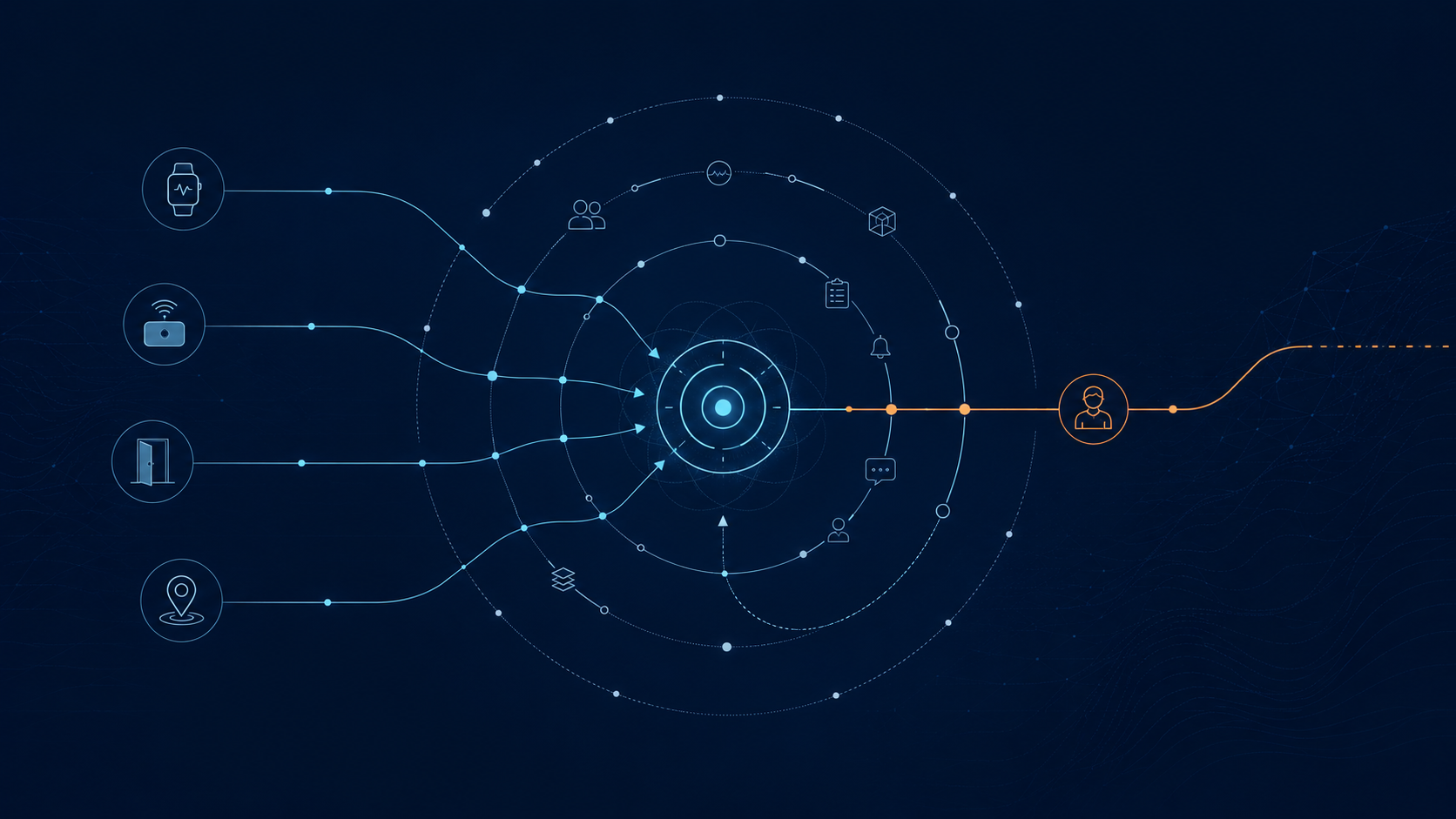
Rythmos follows the same operating principle used throughout this guide: location creates value only when it improves a response. The platform is built around resident movement rather than a fixed room or a single device.
One operating view across environments
Rythmos connects wearables, in-apartment sensing, door and exit monitoring, mesh infrastructure, and software through one awareness and workflow layer. The Community Manager brings alerts, maps, response workflows, dashboards, and reporting into the same operating view.
Coverage can extend from apartments and common areas to courtyards, campus spaces, and beyond the property boundary. Where the use case requires it, indoor mesh and GPS/LTE coverage can work as one workflow, rather than forcing staff to switch systems at the door.
Context before notification
The Rythmos operating model has four layers:
- Sense
- Understand
- Act
- Learn
Signals from devices and connected systems are evaluated against identity, location, time, history, and change from baseline. The platform then prioritizes the event and routes it with the information staff need to respond.
This design targets a common operational problem: alert volume without clarity. The buyer should still test prioritization rules, escalation behavior, and false or duplicate events in the proposed community.
Open data, differentiated orchestration
Rythmos separates the data layer from the intelligence layer. Its interoperability model supports API-based integrations, event-level data sharing, and connections with clinical, reporting, and access-control systems. Its governance model states that communities own their data and control visibility through configurable, role-based access.
The proprietary layer handles normalization, event prioritization, context, and workflow orchestration. For operators, the advantage is practical: keep access to operational data while avoiding another disconnected alert stream.
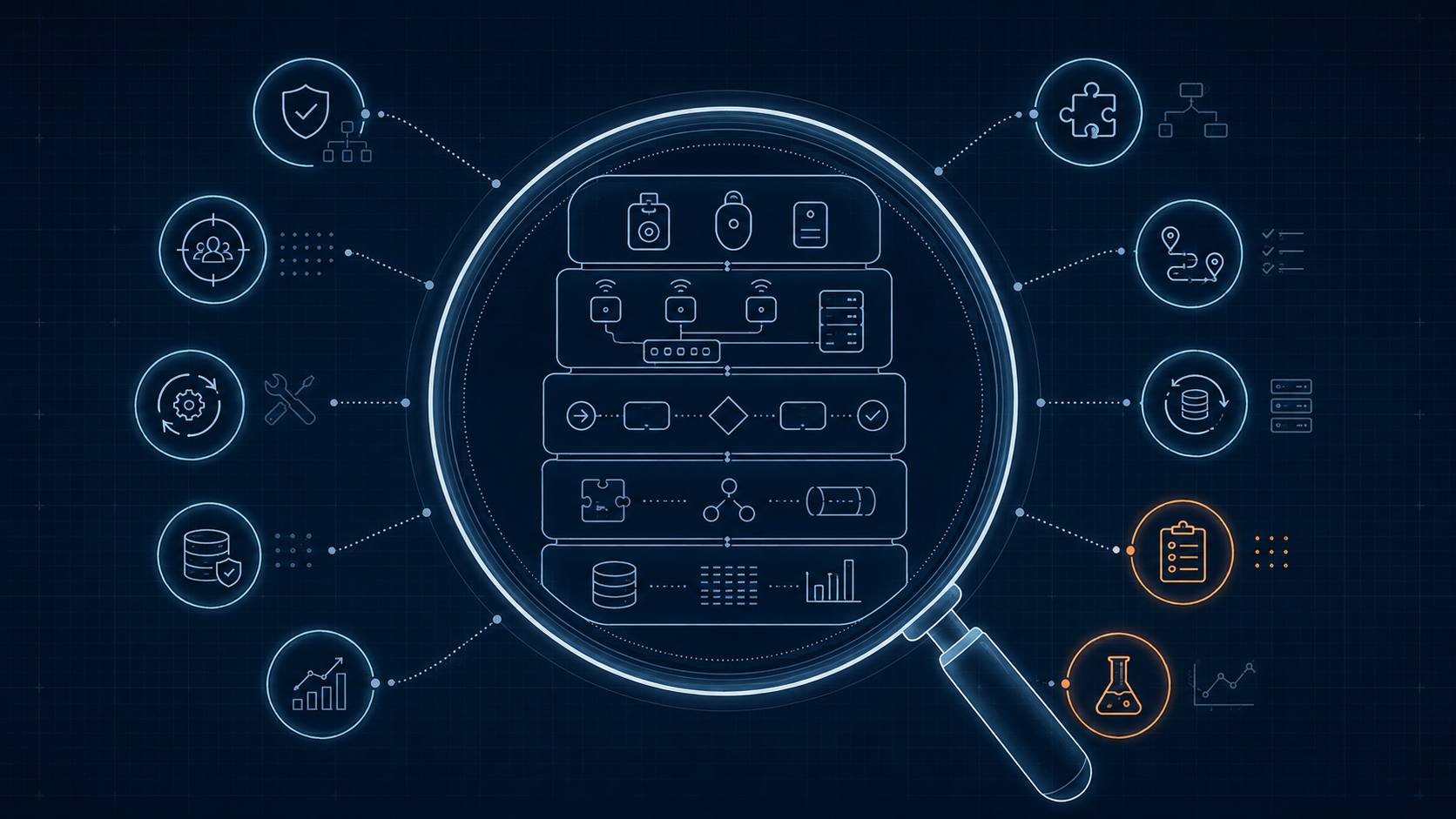
Ten questions to ask an RTLS vendor
- Which resident, staff, and asset workflows run in production today?
- Which spaces and transitions are included in the proposed coverage design?
- What precision and update behavior does each workflow require, and how will you validate it onsite?
- What information reaches staff, and which role owns the next action?
- How do acknowledgment, escalation, reassignment, and closure work across shifts?
- What continues during power, network, gateway, battery, or integration failures?
- Who maintains devices, infrastructure, software, and location maps after launch?
- Who owns the data, who can access it, and how are retention, export, and deletion controlled?
- Which integrations are standard, configurable, custom, or planned?
- Which measurements determine whether the pilot is accepted and the portfolio rollout proceeds?
Credible answers include architecture details, a workflow demonstration, clear responsibilities, and an on-site validation method.
FAQ
Is RTLS the same as GPS?
No. RTLS connects location to a workflow. GPS is one positioning method and works best outdoors. Senior living deployments often combine indoor, door, zone, and outdoor methods.
Does RTLS replace nurse call?
Not always. RTLS can add current location and context to resident requests. Existing nurse call may remain part of the response environment. Confirm the exact production workflow during technical discovery.
How accurate is senior living RTLS?
There is no useful universal number. Precision depends on the technology, building, infrastructure density, calibration, device placement, and movement. Define the requirement for each workflow and validate it onsite.
Does every resident need a wearable?
It depends on the use case. Some workflows require a resident-worn device. Others use door, room, or environmental sensing. Match the device to the resident, workflow, and care policy.
What should an RTLS pilot measure?
Measure the full workflow: coverage, location confidence, event delivery, acknowledgment, escalation, false or duplicate events, usability, maintenance, failure behavior, data access, and reporting.